The Jewish Quarter in Prague, or Josefov, is one of the best-preserved historic Jewish quarters in Europe. It sits right next to the Old Town, a short walk from Charles Bridge, and holds centuries-old synagogues, a truly unique cemetery and a community with a long history behind it. The name “Josefov” comes from Emperor Joseph II, whose 1781 Edict of Tolerance eased, though did not end, the restrictions placed on the city’s Jewish community.
A short history of Josefov
Prague’s Jewish community has lived in this part of the city since the 13th century, when it was forced into a walled ghetto, cut off from the rest of the city by the religious and legal rules of the time. In the late 19th century much of the original quarter was torn down in an urban “modernization” project inspired by the new layout of Paris. Only the main synagogues, the Jewish Town Hall and the cemetery survived, and that’s what you can visit today. According to a widely told account, during the Nazi occupation the quarter was preserved as a future “museum of an extinct race,” and religious objects from Jewish communities across Europe were brought here. Cruelly and paradoxically, that is said to be why it remained so intact while the Czech Jewish community itself was devastated by the Holocaust.
What to see in the Jewish Quarter
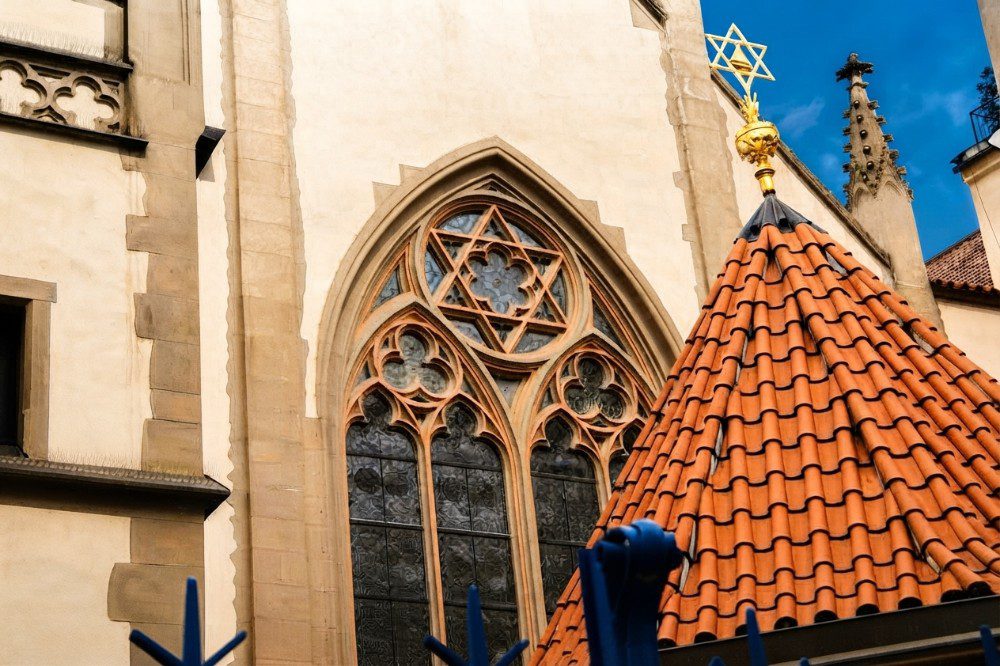
- Old-New Synagogue (Staronová synagoga): the oldest active synagogue in Europe, early Gothic from the 13th century and still used by Prague’s Jewish community. Legend says the remains of the Golem, the clay creature Rabbi Loew created in the 16th century to protect the community, lie in its attic.
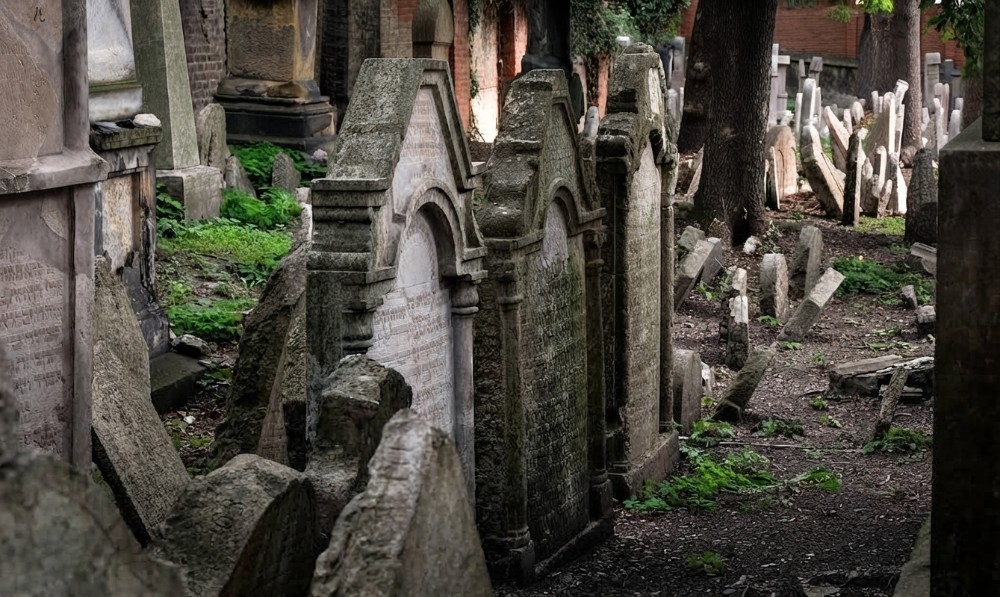
- Old Jewish Cemetery: one of the most striking places in Prague. Since it couldn’t expand outward for centuries, graves were layered up to twelve deep. Today you can see more than 12,000 headstones crowded together in a way you won’t forget, and an estimated 100,000 people are buried here in total. One of the most visited graves is Rabbi Loew’s.
- Pinkas Synagogue: now a Holocaust memorial, with the names of more than 77,000 Jewish victims from Bohemia and Moravia handwritten on its walls. Upstairs is an exhibition of drawings by children from the Terezín ghetto.
- Klausen Synagogue: the largest in the complex. It now holds a permanent exhibition on Jewish traditions and holidays, useful context for the rest of your visit.
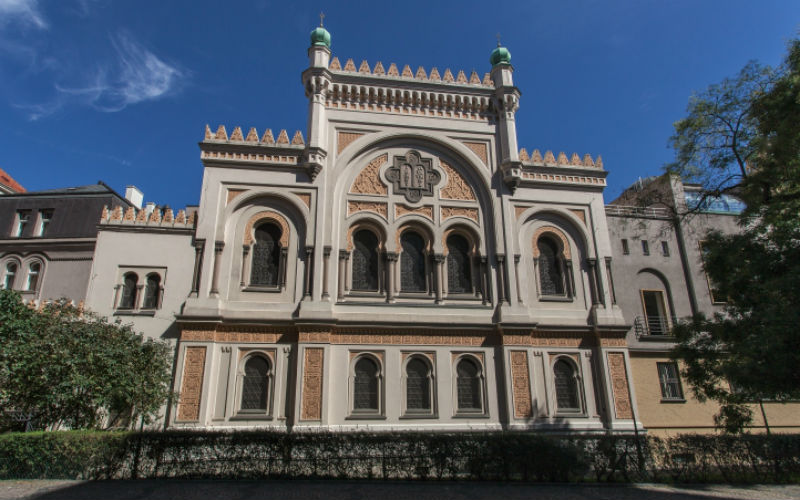
- Spanish Synagogue: the newest and most ornate, a 19th-century Moorish Revival building with a gilded interior, built on the site of the quarter’s oldest synagogue.
- Jewish Town Hall: its clock has Hebrew numerals and hands that run counterclockwise (Hebrew reads from right to left). It’s worth stopping to look before you move on.
Jewish Quarter tickets: how the visit works
Most of the sights are covered by a combined Jewish Museum in Prague ticket, which includes the Pinkas, Klausen and Spanish synagogues, the cemetery and the exhibition hall. Because the Old-New Synagogue is still an active place of worship, it isn’t part of the Jewish Museum and usually needs a separate ticket.
How much time do you need?
Two to three hours is enough to see the main synagogues and the cemetery without rushing. Since it’s so close to Old Town Square, it’s easy to combine with the rest of the historic center in a single morning or afternoon. Many visitors head straight on to Charles Bridge, just a few minutes’ walk away.
Practical tips
- This is a place of remembrance and active worship, so be respectful, especially inside the synagogues and the cemetery.
- Men may need to cover their heads in the Old-New Synagogue. If you don’t have anything, kippahs are usually handed out at the entrance.
- The sites close on Saturdays (Shabbat) and on major Jewish holidays. Check before you go, especially if your trip falls around Passover or Rosh Hashanah.
- Photos aren’t allowed in the Old Jewish Cemetery or in most of the synagogues, so save your camera for outside.
Our advice
This is one of the most historically powerful visits in the city, and it means much more with context. The free walking tour of the Old Town and the Jewish Quarter covers the area and explains it all first-hand. If you’re planning the rest of your trip, see our Prague itinerary for 2, 3 or 4 days.